Tap Tile!
Nebula StudioPuzzle
4.82.29K Reviews
- Version
- 1.7.4
- Installs
- 10.00M
- Age Rating
- Everyone
Screenshots
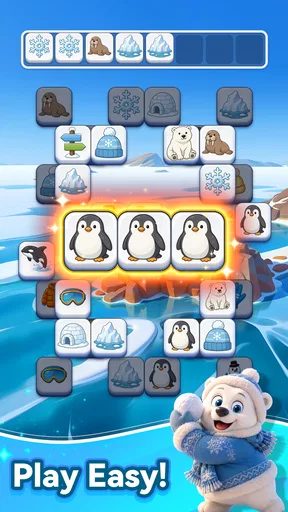
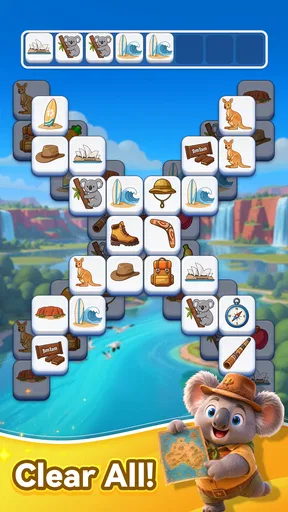
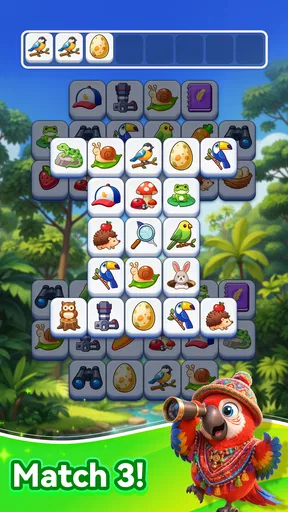
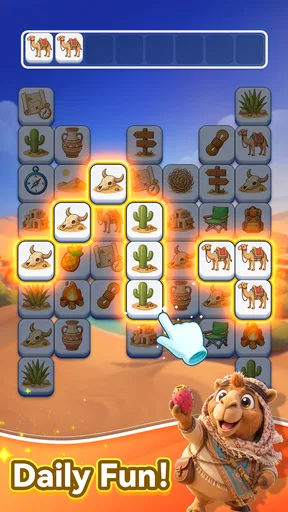
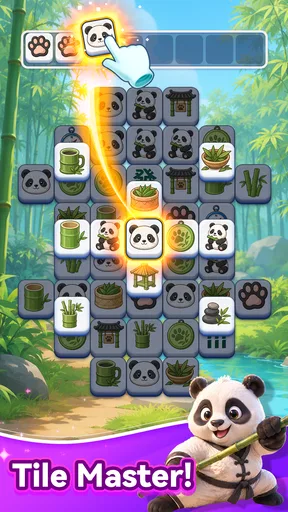
Our Review of Tap Tile!
 Analysis by Appyee
I spent time with Tap Tile! as a light puzzle game rather than treating it like a serious strategy challenge. Its basic idea is immediately clear: tap tiles, match groups of three, and keep the board moving toward a clean finish. That simplicity is the main attraction. I could open it for a short break, understand the next move without a tutorial-heavy setup, and put it down without feeling that I had abandoned a complicated campaign.
It is a free game from Nebula Studio in the puzzle category, aimed at Everyone. The current version is 1.4.4 and it runs on Android 6.0 or later. Those details make it accessible to people using older devices as well as newer phones, although the actual experience will still depend on the phone’s screen size and responsiveness. The game has reached more than five million installs, with an average rating of 4.8 from roughly one hundred thirty-eight thousand ratings and about one thousand one hundred written reviews. That level of adoption suggests that its quick, familiar format has found a large audience, but it does not remove the need to decide whether this particular style of puzzle suits you.
How the tile-matching loop feels in everyday play
The first thing I noticed is how little time the game asks me to spend learning it. The interaction is built around tapping, not dragging several objects at once or memorizing a long chain of rules. I look at the available tiles, identify a possible trio, and decide whether taking it now helps or makes the remaining board harder to read. That creates a gentle layer of planning beneath the relaxed presentation.
In a realistic everyday situation, I would use it while waiting for a coffee, sitting on public transport, or taking a few minutes away from work. It works particularly well when I want something more engaging than scrolling but less demanding than a full-length game. A single decision can be made quickly, so I do not need to reserve a long uninterrupted session just to enjoy it.
That convenience also explains the game’s limitation. If you want a puzzle with a deep story, a large world, or a carefully developed competitive scene, this is not the right destination. The appeal comes from repeating a compact matching action and gradually improving your choices. Players who enjoy complex logic grids, word puzzles, or elaborate physics challenges may find the format too narrow.
Why the “three tiles” rule matters more than it first appears
Matching three sounds automatic, but the order of taps can change the shape of a round. I found it useful to avoid clearing every obvious group immediately. Sometimes a visible trio is better left alone while I inspect the surrounding tiles, because removing one set can expose useful pieces or leave awkward leftovers. The best move is not always the one that produces an instant match; it can be the move that preserves several future options.
My practical advice is to scan the whole visible area before tapping. I look for repeated symbols, then check whether one of those tiles is blocking another likely group. This small pause makes the game feel less like random tapping and more like controlled board management. It is also a good way to keep a relaxed game from becoming frustrating when the layout becomes less obvious.
Another useful habit is to resist tunnel vision. When I focus on one trio, I can miss a second combination that would be more valuable to clear first. I try to compare at least two possible matches and ask which one leaves the cleaner arrangement. That approach does not turn the game into a demanding brain-training exercise, but it gives each tap a reason.
Progress, pressure, and the cost of a careless move
The pressure in this kind of game comes from board control rather than a timer that I need to race against. A poor choice can reduce the number of useful options left, while a careful sequence keeps the screen manageable. That makes the experience calmer than many reflex-based puzzle games, yet it still gives me a reason to pay attention.
I would describe the difficulty as approachable rather than effortless. The opening interaction is simple enough for a casual player, but the player still has to recognize patterns and think one or two moves ahead. Someone looking for a completely passive game may not enjoy that small demand for concentration. On the other hand, someone who wants a short mental reset may appreciate that the challenge arrives through decisions instead of speed.
The most effective way I found to reduce pressure was to treat each board as a limited planning space. I do not tap simply because a match is available. I first check whether the move will leave isolated tiles or make the next group harder to identify. This is a specific trade-off: immediate progress feels satisfying, but preserving flexibility is often more important.
That trade-off also affects how suitable the game is for children. The Everyone rating makes it broadly accessible, and the rule is easy to explain. Still, younger players may benefit from learning to pause and inspect rather than tapping randomly. Adults who want a game to play together with a child should expect the activity to be about observation and turn-by-turn choices, not a shared story or a cooperative adventure.
Who will enjoy it, and who should skip it
I would recommend this game to people who like tidy, repeatable puzzle loops. It is a good match for players who enjoy sorting visual patterns, making small decisions, and relaxing without needing to follow dialogue or remember a plot. It can also suit someone returning to mobile games after a long break, because the central interaction is easy to understand.
I would be more cautious about recommending it to players who need constant novelty. If your ideal puzzle game introduces new mechanics, elaborate level goals, or increasingly unusual rules, the basic tile-matching structure may feel repetitive. The same is true for players who prefer direct competition. The game’s pleasure comes from solving the board in front of you, not from proving that you are faster or more skilled than a live opponent.
It is also not my first choice for a long flight or another situation where I want a substantial game to occupy hours. The short-session design is a strength when I have limited time, but it can become a weakness when I am looking for a richer progression system. A traditional match-three game may be better for players who want cascading effects and a more familiar level-based rhythm, while a logic puzzle may be preferable for those who want one carefully constructed problem at a time.
Fairness, spending, and what I would check before committing
The game is free to download, which lowers the barrier to trying it. I could approach it as a casual pastime without paying at the start. From a reader’s perspective, that is the important verified purchase fact: the entry price is zero. I would still encourage anyone who is sensitive to optional spending to inspect the purchase information shown on their own device before making a decision, because the free download alone does not explain every possible commercial detail of a mobile game.
I do not treat a free label as proof that a game is automatically fair. Fairness depends on whether progress is understandable, whether mistakes feel recoverable, and whether spending changes the nature of the challenge. In my view, the central matching rule is at least easy to judge for yourself: you can see the board and make the decisions directly. That transparency is more reassuring than a system where success depends on hidden character statistics or complicated equipment.
At the same time, I would not make a stronger claim about purchases than the confirmed facts allow. I would not promise that every optional item is cosmetic, that there are no advertisements, or that spending has no effect on progress. Those are details I would verify in the live store and in the game before handing it to a child or allowing unrestricted purchases. For a careful buyer, this is a sensible part of the installation decision, not a reason to assume the worst.
The same caution applies to competitive fairness. This is not a game I would choose when I want a ranked contest or a clear player-versus-player standard. Its appeal is personal: I am evaluating my own choices against the tile arrangement. That makes it less vulnerable to the usual concerns about unequal equipment or paid advantages in a competitive ladder, but it also means there is no obvious competitive framework for players who want leaderboards or direct rivalry.
Small strategies that make the game more satisfying
My first strategy is to identify the most constrained tiles before taking the easiest trio. A group that is surrounded by many other pieces may remain available later, while a tile with only one practical route can disappear from consideration if I make the wrong move. This is not a complicated system, but it changes the way I read the board and gives the game more depth than the short summary suggests.
My second strategy is to use a “two-option check.” Before tapping, I compare the obvious match with another possible trio and ask which one reveals more of the board or leaves fewer awkward singles. This is especially helpful when I am playing while distracted. It reduces impulsive moves without turning a five-minute session into a formal solving exercise.
My third strategy is to stop treating a failed round as wasted time. A board that goes badly can still show me which visual patterns I overlooked and which early choices narrowed my options. On a later attempt, I can change the order of those choices. That makes the game more appealing to me than a puzzle where failure feels entirely dependent on luck, although I would still avoid claiming that every board is equally forgiving without a longer, controlled test.
For a relaxed session, I would play with notifications silenced and brightness adjusted to the surrounding light. Tile games depend on quick visual recognition, so glare or a dim display can make the board feel harder than it really is. I would also avoid playing when I am rushing out the door. The game is casual, but its best moments come when I give myself enough attention to compare moves rather than tapping through the first available match.
How it compares with familiar puzzle alternatives
Compared with a conventional match-three game, this title feels more focused on selecting groups than on building dramatic chains. Players who love cascades, special pieces, and explosive board changes may prefer that traditional format. I find Tap Tile! more suitable when I want the visual calm of sorting and matching without needing to manage a large collection of power-ups.
Compared with a pure logic puzzle, it is easier to enter but usually less intellectually demanding. A logic-grid game asks me to track explicit relationships and eliminate possibilities through deduction. Here, the challenge is more immediate and visual: notice the groups, decide the order, and avoid closing off useful options. That makes it friendlier for short breaks, though it may not satisfy someone seeking a single difficult problem that rewards extended analysis.
Compared with a word puzzle, it also removes language from the equation. That can be an advantage for players who want pattern recognition without vocabulary work, and it makes the game easier to share across different language backgrounds. The trade-off is that the experience offers fewer opportunities for learning or expressive problem-solving. It is a compact visual pastime, not a vocabulary tool.
Compared with a competitive puzzle app, the personal nature of the board is its strongest fairness advantage and its largest social limitation. I do not need to worry about facing a player with a stronger collection or a faster connection, but I also do not get the energy of a live opponent. The right choice depends on whether my goal is unwinding privately or testing myself against other people.
Device fit, access, and practical expectations
The minimum operating-system requirement is Android 6.0, so the game is not restricted to only recent Android hardware. That is useful if I am installing it on an older spare phone or recommending it to someone who does not upgrade often. Even so, I would judge the experience on the actual handset: a small display can make similar tile designs harder to distinguish, and touch accuracy matters when several choices are close together.
The game is free and carries an Everyone age rating, which makes it straightforward to consider for a broad household audience. I would still set expectations clearly for children: the accessible rating describes the intended age suitability, not whether the game will always be educational or free from every form of commercial prompt. For family use, I would review the device’s purchase controls and let the child play under the same sensible supervision I would use with any free mobile game.
The developer is listed as Nebula Studio, and the current version is 1.4.4. I see the version number as useful when troubleshooting or comparing the experience on different devices, but I would not infer a particular update schedule or support policy from it. If a feature behaves differently after installation, checking the version shown on the device is a practical first step before assuming the game itself is unsuitable.
My trust verdict after weighing the trade-offs
The large audience and strong average rating make Tap Tile! easy to notice, but my recommendation rests more on the way its loop fits real life. I like that I can understand the objective quickly, play without a long commitment, and improve by thinking about order rather than relying only on speed. The game earns its place as a calm break-time puzzle when I want a little focus without a lot of ceremony.
My reservation is that the same simplicity can become repetitive. I would not install it expecting a story-driven adventure, a demanding logic curriculum, or a serious competitive ladder. I would also check the live purchase presentation and any on-device prompts before deciding whether it belongs on a child’s phone or a tightly controlled budget device. Those checks are part of being a careful player, especially when a game is free to start.
My honest recommendation is to try it if you want short, visual puzzle sessions and enjoy planning the order of simple matches. Skip it if you need constant new mechanics, deep progression, or head-to-head competition. For me, its best use is a quiet few minutes between larger tasks: enough interaction to reset my attention, but not so much complexity that the game becomes another obligation.
Privacy and Permissions
See what permissions an app requests and how it handles your data.
- Wi-Fi connection information
- view Wi-Fi connections
- Other
- view network connections, full network access, control vibration, prevent device from sleeping
Verdict
Strengths of Tap Tile!
- Simple tap-to-match gameplay that is easy to learn immediately.
- Short levels make it convenient for quick breaks or casual play.
- Bright tile designs make the board easy to read on small screens.
- Gradually increasing difficulty keeps basic puzzles from feeling repetitive.
- Offline play is useful when you have no reliable internet connection.
Limitations of Tap Tile!
- Some levels may feel repetitive after extended play sessions.
- Later puzzles can become frustrating if the available moves are limited.
- Ads may interrupt the experience, especially between completed levels.
- The game offers limited depth for players seeking complex strategy.
- Progression can feel slow without spending extra time or using hints.
Other Releases by Nebula Studio
View All


Similar Picks in This Category
View All
Block Blast!
HungryStudio4.8

Braindom: Brain Games Test
Lahana Game Studio4.6

AMAZE!
CrazyLabs LTD4.6

Sudoku - Classic Sudoku Puzzle
Oakever Games4.7

Art Puzzle - Puzzle Games
Easybrain4.8

Amaze GO!
Oakever Games4.9
Frequently Asked Questions
What is Tap Tile! and how do you play it?
Tap Tile! is a casual puzzle game built around matching and clearing colorful tiles. During each level, you tap groups or combinations of tiles according to the game’s rules to remove them from the board and complete the objective. The early stages are easy to understand, while later puzzles require more planning, careful timing, and attention to the available moves.
Is Tap Tile! free to download and play?
Tap Tile! can generally be downloaded and played without an upfront purchase, making it accessible to casual players who want a quick puzzle experience. However, free games may include advertising, optional in-app purchases, or extra items that can speed up progress. Before downloading, check the store listing for the current pricing, payment options, and any platform-specific restrictions.
Does Tap Tile! require an internet connection?
Tap Tile! may allow you to play some puzzle levels without a constant internet connection, which is useful during travel or when your signal is limited. Nevertheless, online access can be required for advertisements, rewards, cloud synchronization, updates, or certain events. Availability may vary between Android and iOS versions, so test the game offline after installation if this feature is important to you.
Are there ads or in-app purchases in Tap Tile!?
Tap Tile! may use advertisements as part of its free-to-play model, and you could see ads between levels or after requesting optional rewards. Depending on the version, the game may also offer in-app purchases for boosters, extra lives, coins, or an ad-free experience. Review the purchase settings carefully, especially if children will be playing on your device.
Is Tap Tile! suitable for children and casual players?
Tap Tile! is designed for short, accessible puzzle sessions and does not usually require advanced gaming skills, making it suitable for many casual players. Still, parents should review the age rating, advertising content, privacy information, and purchase controls before allowing children to play. Difficulty can increase over time, so younger players may occasionally need help with more challenging boards.
Play our best games!


